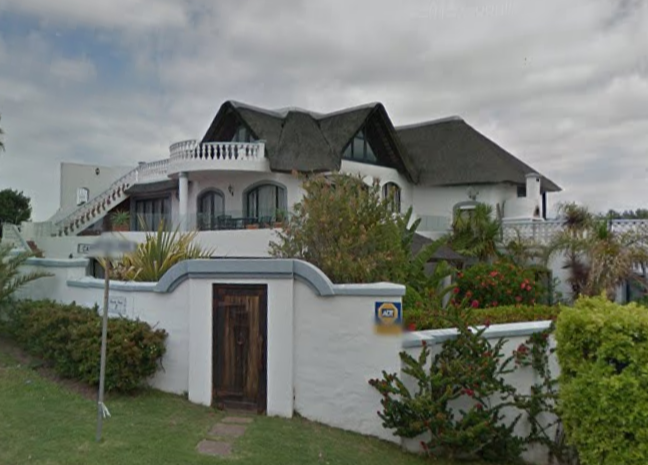
Lightning Conductors
Lightning conductor poles are installed and maintained as per SANS regulations
Regulations for Thatch Roof Lightning Conductors
This part of IEC 62305 deals with the protection, in and around a structure, against physical damage and injury to living beings due to touch and step voltages.
The main and most effective measure for protection of thatch structures against physical damage is considered to be the lightning protection system (LPS). This usually consists of both external and internal lightning protection systems.
An external LPS is intended to:
- intercept a lightning flash to the structure (with an air-termination system),
- conduct the lightning current safely towards earth (using a down-conductor system),
- disperse the lightning current into the earth (using an earth-termination system).
An internal LPS prevents dangerous sparking within the structure using either equipotential bonding or a separation distance (and electrical insulation) between the external LPS components and other electrically conducting elements internal to the structure.
The main protection measures against injury to living beings due to touch and step voltages are intended to reduce the:
- dangerous current flowing through bodies by insulating exposed conductive parts, and/or by increasing the surface soil resistivity,
- occurrence of dangerous touch and step voltages by physical restrictions and/or warning notices.
The type and location of an LPS should be carefully considered in the initial design of a new structure, thereby enabling maximum advantage to be taken of the electrically conductive parts of the structure. By doing so, design and construction of an integrated installation is made easier, the overall aesthetic aspects can be improved, and the effectiveness of the LPS can be increased at minimum cost and effort.
Once construction work on a site has started, access to the ground and the proper use of foundation steelwork for the purpose of forming an effective earth-termination, may well be impossible. Therefore, soil resistivity and the nature of the earth should be considered at the earliest possible stage of a project. This information is fundamental to the design of an earth-termination system and may influence the foundation design work for the structure.
Regular consultation between LPS designers and installers, architects and builders is essential in order to achieve the best result at minimum cost.
If lightning protection is to be added to an existing structure, every effort should be made to ensure that it conforms to the principles of SANS 62305-3. The design of the type and location of an LPS should take into account the features of the existing structure.
Lightning Protection Services offered

Supply of lightning masts, rods & conductors
Lightning masts, rods, and conductors are designed to provide optimal protection against lightning strikes. Suitable for industrial, commercial, and residential applications

Installation of lightning masts, rods & conductors
The lightning protection systems installed are compliant with the Lightning Conductor Installation Regulations of South Africa (LCIRSA). Installation certificates are issued.

Inspection of existing lightning protection systems
Inspections are done on existing lightning protection installations, meeting insurance requirements. Reports and certificates are issued for compliant lightning protection systems.

Maintenance and Repairs
We perform routine maintenance on lightning protection systems and perform repairs where deemed necessary. Certificates are issued upon completion.

Testing and Assessing
Testing and assessment services are performed to ensure your lightning protection systems meet insurance requirements. Reports and certificates are issued.

Lightning and surge arrestors
Supply and fit of lightning and surge protection kits, protecting against power surges and lightning strikes. Protects appliances electronic equipment and machinery.

Solar Protection Systems
Lightning solar protection ensures the safety and longevity of your solar panel systems by safeguarding them against lightning strikes and power surges. Our specialised solutions include lightning arrestors, surge protectors, and grounding systems designed specifically for solar installations.

Early Streamer Emission (ESE)
Early Streamer Emission (ESE) air terminals provide exceptional lightning protection for industrial sites, homes, public buildings, monuments, and open-air locations like sports grounds. During a storm, ESE offers faster and more reliable protection than conventional single rod air terminals.

Consultation and Design
Consultation and design services cater to your specific lightning protection needs, offering tailored solutions for optimal safety and efficiency. Our expert team works closely with you to assess your requirements, analyze potential risks, and develop customised lightning protection strategies.
We Are Here
To Help You
With Your
Lightning Protection Enquiry
Send us a message and we’ll get back to you ASAP !
Installation and Testing of a Lightning Protection System
1. Check if the conductor length is sufficiently high enough to cover the area of the roof of the area to be protected as per SANS 62305-3.Â
2. Ensure that the separation distance is maintained, i.e mast be a min of 1m away from the thatch overhang.
3. Check the condition of the conductor – rust, is the conductor still straight, is it in good conductor –
i.e. does it show signs of falling overÂ
4. Check and test if the earthing is visible and within SANS 62305 standards. Does it meet the minimum requirements for a level III type of protection as per SANS 62305-3.Â
5. Check and test the equipotential bonding of the conductor to the main earth supply as per SANS standards.
6. Check if the correct surge protection is present on the main electrical DB board and is in good working order.
See attached sketch below.
Should all of the above be within the specifications, a certificate as per SANS 10313-2018 will be issued.
A call-out fee to do the test and issue a certificate is applicable.Â
Should any part of the above not meet the requirements of the SANS specifications, a separate quote will be issued to rectify this.
Should the quote not be accepted, the original call out fee will be charged.Â